
In early 2024, a massive cybersecurity campaign known as EmeraldWhale exposed over 10,000 private Git repositories, leaking more than 15,000 cloud service credentials. Attackers exploited misconfigured Git repositories, gaining unauthorized access to sensitive data stored in plaintext. This breach underscores a critical and recurring issue: hardcoded credentials, mismanaged secrets, and inadequate security controls remain among the top attack vectors in enterprise environments.
As enterprises embrace multi-cloud strategies and modern application architectures, the complexity of securing sensitive data, managing machine identities, and implementing encryption services has grown exponentially. Yet, many organizations still rely on outdated security practices. Static secrets stored in configuration files, manually rotated certificates, and ad-hoc encryption implementations introduce significant security risks—both in terms of data breaches and compliance violations.
At ICT.technology, we've observed that organizations often underestimate these risks until they experience a security incident. Securing modern infrastructure requires more than just technology—it demands a holistic, automated approach that ensures scalability, compliance, and operational efficiency. This is where HashiCorp Vault comes in.
Read more: Securing Modern Enterprise Infrastructure with HashiCorp Vault

The rapid adoption of cloud infrastructure has fundamentally transformed how enterprises build and manage their IT resources. As organizations increasingly embrace multi-cloud strategies and complex hybrid deployments, the challenges of maintaining security, compliance, and operational excellence have grown exponentially. At ICT.technology, we've observed that successful cloud adoption and datacenter operations require more than just technical expertise – it demands a systematic approach to infrastructure provisioning that addresses these challenges head-on. Some enterprises already learned this lesson the hard way.

In Part 1 of our series, we learned about the basic concepts of Retrieval-Augmented Generation (RAG) and saw how this framework functions similar to a digital library. We examined the three main components - Retriever, Ranker, and Generator - in detail and understood how they work together to generate precise and contextually relevant answers.
In this second part, we delve deeper into the technical aspects of RAG. We will look at how RAG is implemented in practice, what different model types exist, and how RAG-enhanced systems differ from traditional Large Language Models (LLMs).
Read more: Introduction to Retrieval-Augmented Generation (RAG) - Part 2

The modern IT landscape is characterized by increasing complexity, with organizations needing to balance scalability, security, and agility. The Everything-as-Code (EaC) mindset has emerged as a transformative philosophy that goes beyond traditional IT practices, encompassing not only infrastructure but also security, compliance, application deployment, and workflows. It represents a holistic shift towards defining and managing all aspects of IT and business operations through code.
This article dives deep into the Everything-as-Code mindset, examining its role across multiple domains, including infrastructure, security, and workflows. We’ll explore how tools like the HashiCorp stack—Terraform, Vault, Consul, Nomad, and Packer—and complementary tools like Ansible enable the EaC philosophy. We’ll also consider the mindset’s application in defining IT processes and compliance workflows, offering practical insights for decision-makers and technical leaders.
Read more: Everything-as-Code Mindset: A Comprehensive Approach to IT Operations and Beyond
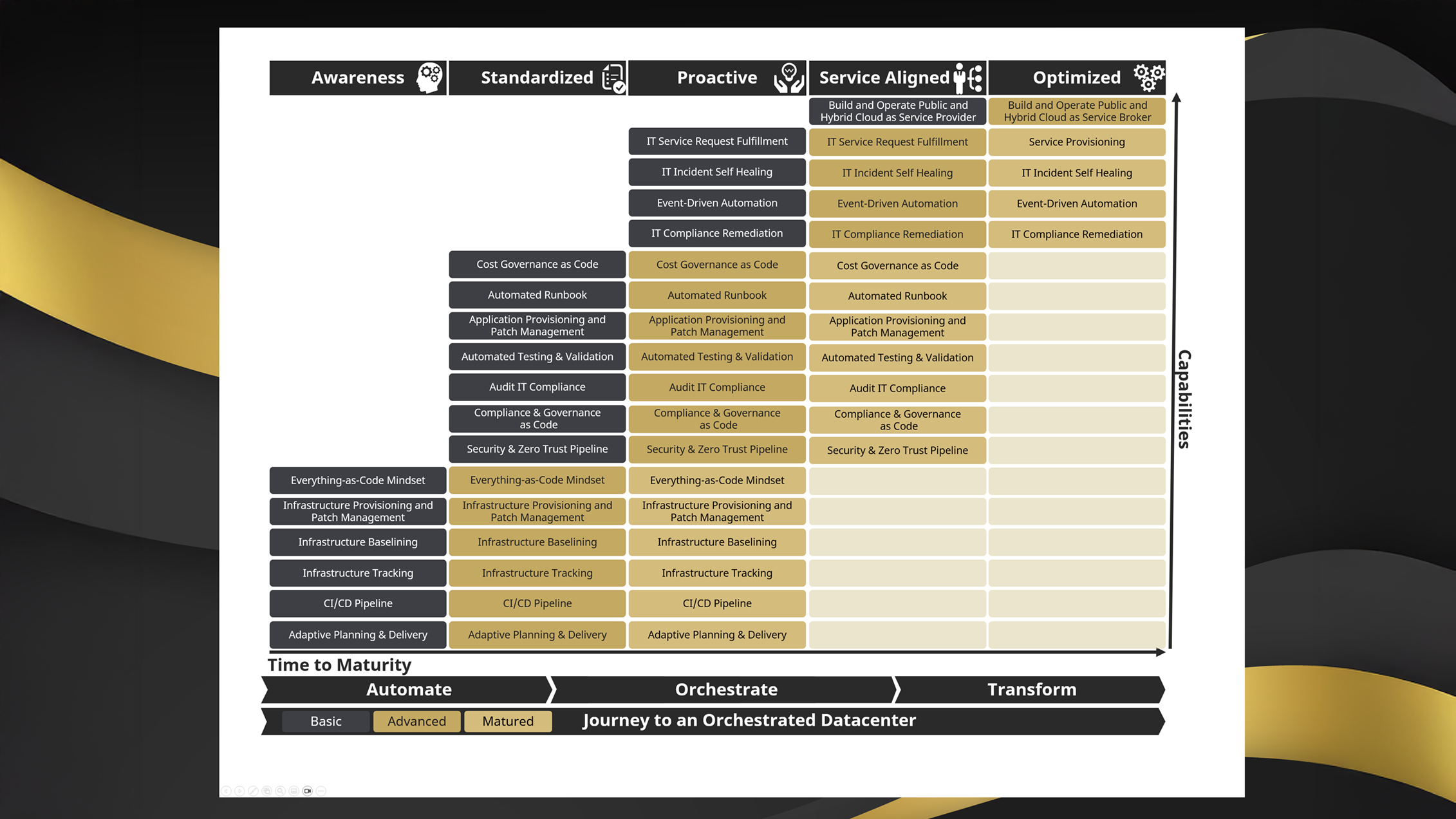
Digital transformation has become a critical imperative for modern enterprises. As organizations face increasing pressure to improve efficiency, reduce costs, and accelerate innovation, the need for a structured approach to IT transformation has never been more apparent. This article outlines a comprehensive framework for understanding and implementing IT transformation, based on proven industry practices and real-world experience.
Read more: Navigating Your IT Transformation Journey: A Strategic Roadmap to Success